Non-Magnetic & Radio-Transparent
GFRP Rebar for Airports & Metro
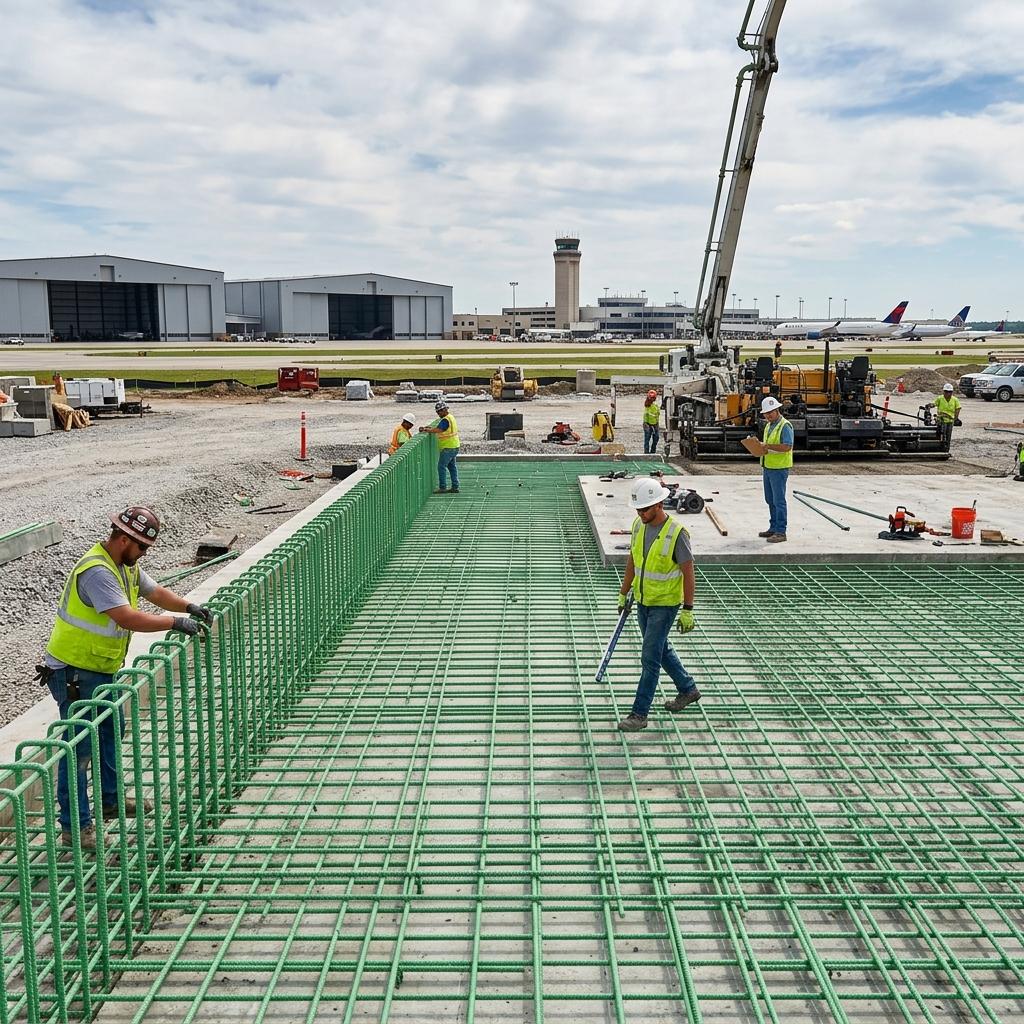
Highly specialized electromagnetic transparent reinforcement. Designed for airport runways, radar bases, passenger platforms, and pre-cast tunnel segments.
The Transit standard.
Why airport authorities and metro railway boards specify non-magnetic reinforcement in critical zones.
100%
Electromagnetic Transparency
Completely radio-transparent and non-magnetic. Will not block signal transmission for flight radars or trigger track sensor errors.
Stray-Free
Electrical Isolation
Dielectric material protects metro passenger platforms and depot slabs from high-voltage traction current leak risks.
1100
MPa Tensile Strength
Carries extreme aircraft taxiing and landing loads without structural deformation.
0%
Rust & Damp Corrosion
Permanently blocks groundwater seepages in underground metro tunnel slabs.
4×
Lighter for Precast Yards
Substantially speeds up the production, transportation, and crane-lifting of precast concrete segments for tunnels and stations.
Key Aviation & Metro Applications.
Engineering structural safety where electromagnetic fields and water leakage degrade concrete.
Airport Runway Pavements
Runways contain complex instrument landing systems (ILS) and ground radars. Using GFRP airport runway pavement reinforcement ensures 100% signal accuracy for incoming flights.
Radar & Navigation Bases
Weather and airfield radars need concrete foundations that do not distort signals. Electromagnetic transparent concrete reinforcement prevents wave reflection and signal scatter.
Metro Tunnel Linings
Underground tunnels face continuous moisture and stray electrical traction currents. Fiberglass rebar tunnel segments prevent galvanic corrosion, increasing lining life.
Station Platforms
Exposed to track currents and passenger traffic. Dielectric properties isolate the platform concrete, preventing current leakages and ensuring passenger safety.
Aviation Hangar Slabs
Avionics testing and calibration require interference-free magnetic environments. Non-magnetic rebar airport hangars keep testing bays free from structural magnetic distortion.
Precast Tunnel Segments
Metro tunnel boring machines (TBMs) can cut through GFRP reinforcement segments easily. Great for structural launch/reception shafts where steel would damage the TBM cutter head.
GFRP vs Steel in Transit Systems
Requirement
GFRP Rebar
Steel Rebar (Fe 500)
Radar & Avionics Signal Path
100% Transparent
(No attenuation)
Blocks & scatters signals
(High interference)
Magnetic Field Distortion
Zero
(Non-Magnetic)
High
(requires calibration offsets)
Underground Water Durability
Immune to moisture & soil chemicals
Corrodes easily, causing spalling
TBM Cutting Performance
Easy cut-through
(no damage to blades)
Cannot cut
(destroys TBM cutter heads)
Passenger Electrical Safety
Dielectric
(100% current isolation)
Conductive
(requires expensive grounding loops)
Transit FAQ.
Why is GFRP rebar required near airport runways and navigation aids?
Airports use high-frequency electromagnetic signals for tracking, navigation, and landing aids. Steel rebars act as electrical screens and reflect waves, creating radar blind spots. GFRP is completely radio-transparent, preventing signal distortion.
How does GFRP prevent electrolysis and corrosion in metro rails?
Metro trains run on high voltage electricity, and stray currents can leak into concrete. This accelerates galvanic corrosion in steel rebars. Being non-conductive, GFRP rebars are immune to electrolysis, protecting the concrete.
What is the advantage of using GFRP in TBM launch and reception shafts?
When a Tunnel Boring Machine (TBM) breaks through a shaft, steel rebars damage the cutter disc. Using GFRP rebars in the breakthrough wall allows the TBM to cut directly through the concrete wall without damage, saving weeks of work.
Is GFRP fire-safe for underground tunnel linings?
Yes. In standard underground structures, the concrete cover protects the reinforcement. Studies show that when encased in concrete, GFRP reinforced structures meet or exceed standard tunnel fire-resistance requirements.

Hindustan FRP
IS 18256:2023 Grade GFRP Rebars