Comparative Analysis
GFRP vs Steel Rebar
A comprehensive engineering comparison of Glass Fiber Reinforced Polymer (GFRP) rebar vs traditional Fe 500/550 carbon steel. Explore cost-benefit analysis, tensile strength, weight, and lifespan.
Core Performance Metrics.
Comparing physical and chemical advantages on structural scale.
2×
Higher Tensile Strength
GFRP offers 1100+ MPa ultimate tensile strength, compared to only 500 MPa for high-strength reinforcement steel (Fe 500).
4×
Lighter Weight Profile
Saves massive fuel in transit, eliminates the need for heavy crane unloading, and increases work safety on-site.
100%
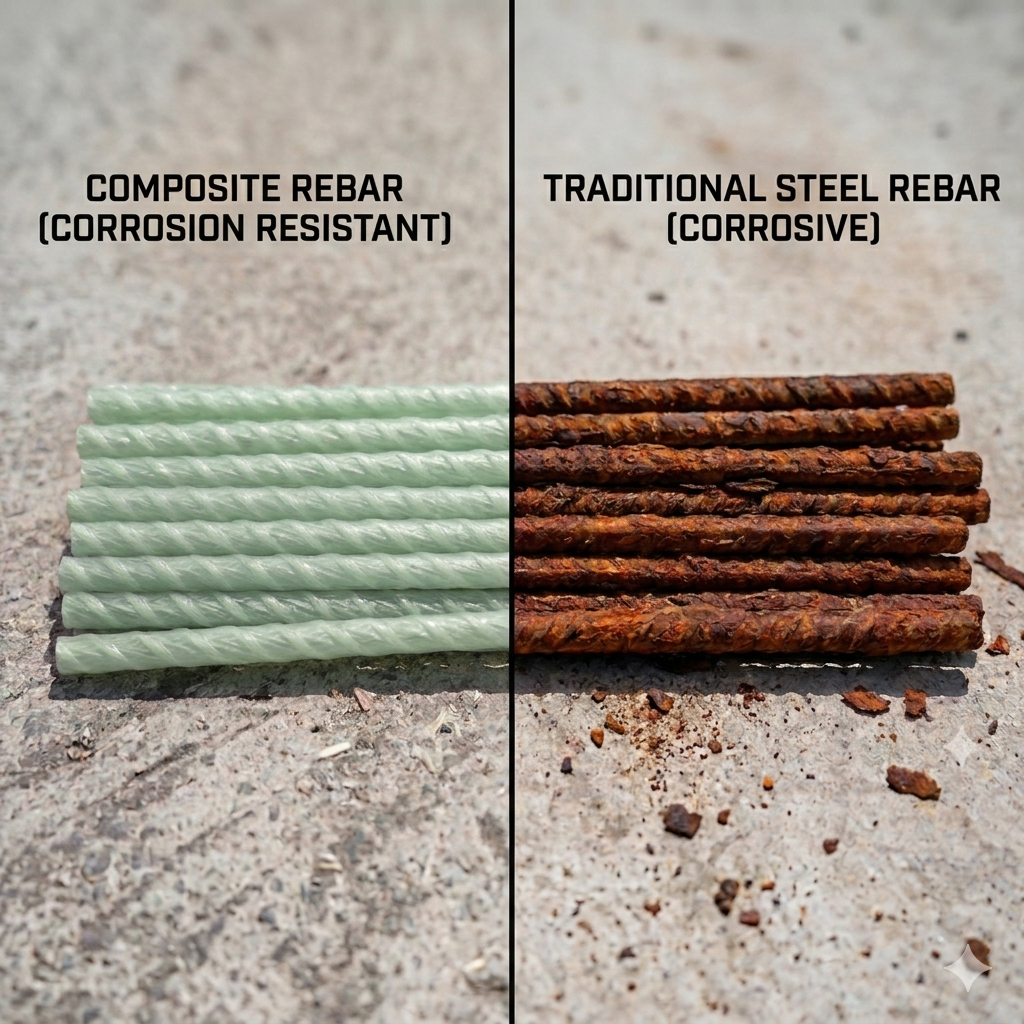
Rust & Acid Proof
Completely impervious to concrete chlorides, aggressive subsoil chemistry, and moisture.
80+
Years Service Life
Tested design life in structural applications without rust degradation.
Dielectric
Zero Signal Interference
Does not conduct stray currents or disrupt magnetic loop/RFID signals in toll lanes, train platforms, or aviation runways.
Detailed Properties Comparison.
A side-by-side engineering evaluation of composite vs. traditional steel.
Engineering Data: GFRP vs Steel (Fe 500)
Property
GFRP Rebar
Steel Rebar (Fe 500)
Tensile Strength
1100 - 1200 MPa
500 - 550 MPa
Elastic Modulus
45 - 50 GPa
200 GPa
Density
(10mm dia)
1.9-2.1 g/cm3
7.8 g/cm3
Corrosion Vulnerability
Immune to water, salts, acids
Corrodes in damp or coastal soils
Electrical Conductivity
Non-conductive
(Dielectric)
Highly Conductive
Magnetic Susceptibility
Non-magnetic
(Transparent)
Magnetic
Thermal Expansion
(Coefficient)
Matches concrete
(stable)
Matches concrete
(stable)
Cost Analysis: The True Value.
Why initial material costs don't tell the whole story of reinforcement expense.
Initial Purchase Cost
On a per-kilogram basis, GFRP appears slightly more expensive than steel. However, since GFRP is 4x lighter, you buy far less weight for the same linear length. On a per-meter basis, GFRP is often cost-comparative or cheaper than traditional steel.
Installation & On-Site Savings
Because workers can lift and carry multiple GFRP bars without cranes, placement is 30% to 40% faster. Tying and positioning require less effort, directly lowering on-site labor overhead and project timeline delays.
Zero Maintenance Life-Cycle
Traditional concrete structures reinforced with steel require costly repair grout injection or carbon-wrap rehabilitation every 15-20 years due to internal rusting. GFRP eliminates maintenance, saving millions in long-term operating costs.
Common Questions.
Is GFRP rebar cheaper than steel?
Yes, when considering linear meters and lifecycle. While a ton of steel might appear cheaper, you get 4 times more meters of GFRP per ton due to its light weight. Combined with lower shipping, handling, and zero maintenance costs, GFRP offers superior financial savings.
How does the lower elastic modulus of GFRP affect design?
GFRP has an elastic modulus of 45-50 GPa, which is lower than steel (200 GPa). Consequently, GFRP concrete structures are typically designed based on serviceability limits (deflection and crack width controls) rather than ultimate strength limits. Engineers compensate by adjusting bar spacing or diameter as per ACI 440 design codes.
Can we use standard steel design software for GFRP designs?
GFRP designs follow concrete principles but use different material reduction factors and design formulas (e.g. ACI 440.1R guidelines). Specialized modules in standard civil design software, or direct compliance worksheets, are used to adjust for composite behavior.

Hindustan FRP
IS 18256:2023 Grade GFRP Rebars