Corrosion Defense Comparison
GFRP vs Epoxy Coated Steel Rebar
Learn why thin epoxy coatings are vulnerable to shipping and installation scratches, and why solid-body composite GFRP rebars offer 100% scratch-immune rust protection.
The Scratch vulnerability.
Why thin paint coatings fail to protect high-cost concrete infrastructure.
Solid
Composite Matrix Protection
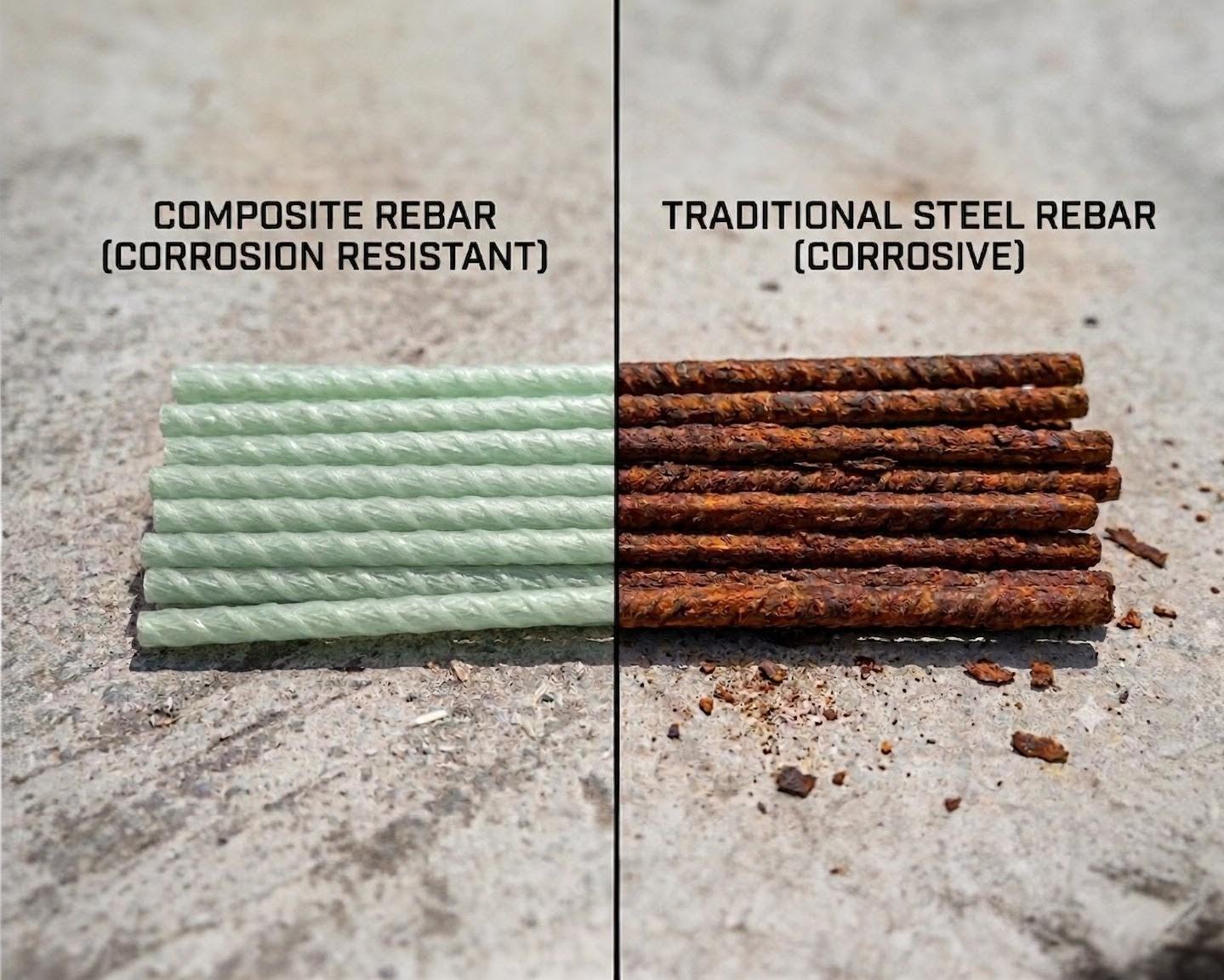
Unlike coated steel, GFRP is a solid composite of glass fibers and epoxy resin. Scratching it on-site has zero effect on its rust-free performance.
0%
Rust Under-migration
A scratch on epoxy steel allows water to seep under the coating, causing rapid, hidden rust creep along the entire bar inside the concrete.
4×
Lighter Weight
Reduces transport costs and on-site crew fatigue, accelerating execution timelines.
Zero
Touch-up Paint
GFRP does not require time-consuming, paint-deep touch-up spray repairs before concrete pour.
80+
Years of Marine Life
Excellent durability in marine splash zones, salt flats, and coastal foundations without expensive chemical wraps.
Why Epoxy Coated Rebar Fails.
Traditional epoxy coated steel rebar has built-in risks during shipping and handling.
Site Handling Scratches
Workers walking on bars, crane dragging, and cutting on-site create micro-cracks in the thin epoxy layer. Even a scratch as small as 0.1mm triggers aggressive corrosion.
Bending Micro-cracking
Bending epoxy steel bars to form stirrups or hooks stretches the outer coating, causing micro-tears that expose the bare carbon steel to moisture.
Saltwater Delamination
In high-chloride areas (coastal docks, bridge decks), salt ions find defects in the coating. The corrosion pressure lifts the epoxy paint layer off the steel, accelerating structural failure.
Expensive Touch-up Work
Engineers must inspect and manually spray touch-up epoxy paint on every cut end and scratch before pouring concrete. This labor-intensive check is avoided with GFRP.
Poor Concrete Bond
Smooth epoxy coating reduces the mechanical bond strength between the steel rebar ribs and concrete, whereas ribbed GFRP provides high mechanical interlocking.
The GFRP Solution
GFRP is not a coated product; it is a homogeneous composite. Its rust-free property is not paint-deep—it is embedded through the entire core of the bar, making it safe from site handling damage.
GFRP Rebar vs Epoxy-Coated Steel
Risk Factor
GFRP Rebar
Epoxy Coated Steel Rebar
Vulnerability to Scratches
Immune
(Solid composite matrix)
Very High
(even tiny scratches trigger rust)
Corrosion Creep / Under-migration
Zero
(Non-metallic material)
High
(rust spreads under the paint layer)
On-site Coating Inspection Requirement
None
Mandatory
(each scratch must be repainted)
Mechanical Bond to Concrete
High
(spiral wrapped ribbed texture)
Reduced
(slippery epoxy paint surface)
Performance in Coastal Soils
Excellent
(80+ years maintenance-free)
Unreliable
(often fails in under 15-20 years)
Epoxy Alternative FAQ.
Why does epoxy coated rebar fail in concrete?
Epoxy coated rebar relies on a thin paint barrier. During transportation, cutting, and tying, this coating gets chipped or scratched. Once moisture penetrates a scratch, it causes localized galvanic corrosion which lifts the coating, rusting the steel underneath.
Is GFRP rebar cheaper than epoxy coated steel rebar?
Yes. Although the raw material cost per meter is comparable, GFRP saves money by eliminating the need for strict site inspections, coating touch-up sprays, and long-term spalling maintenance work.
Does GFRP bond better with concrete than epoxy coated steel?
Yes. Epoxy coatings create a smooth surface that reduces concrete friction and bond strength. GFRP rebars are manufactured with a sand-coated surface or a spiral-wrapped rib configuration, providing mechanical interlocking matching standard rebars.

Hindustan FRP
IS 18256:2023 Grade GFRP Rebars