IRC & MoRTH Compliant
GFRP Rebar for Roads & Highways
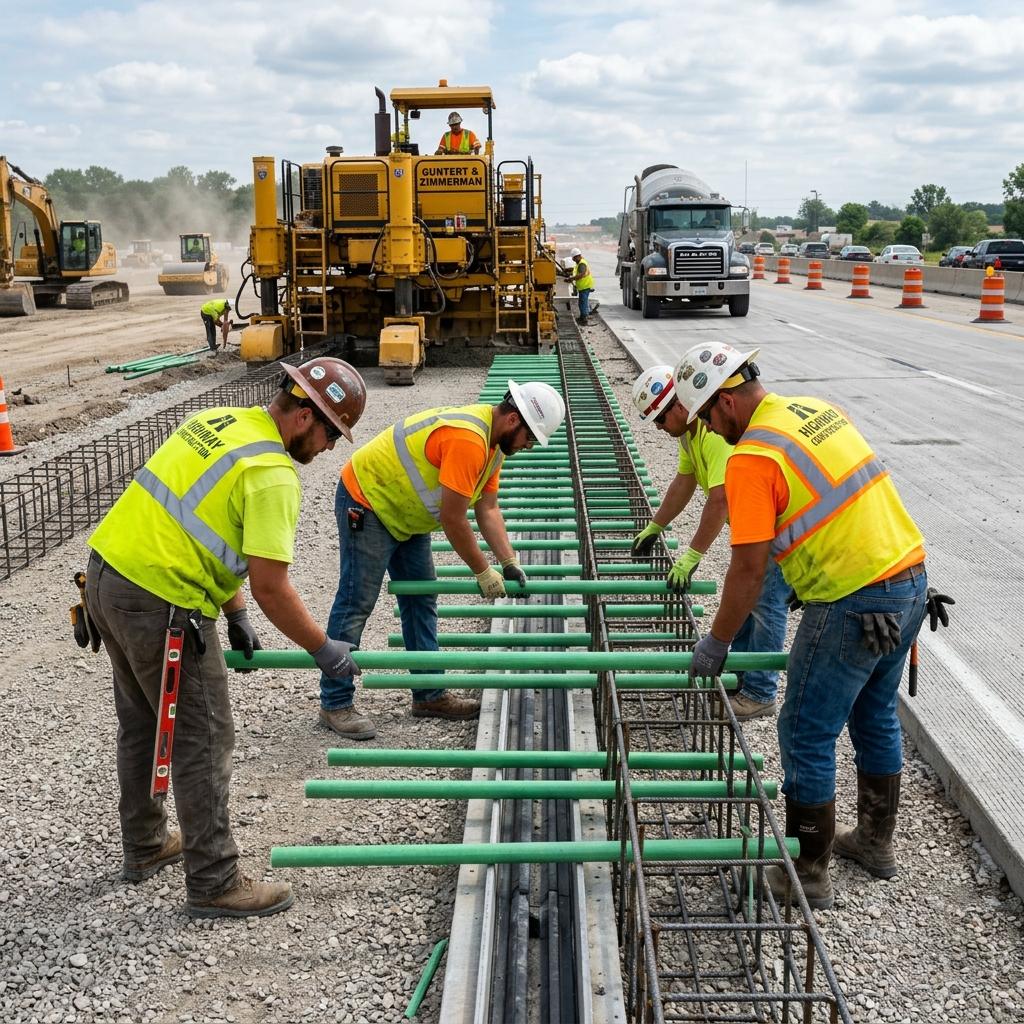
Fully compliant with NHAI, MoRTH, and IRC:137 specifications. Modern concrete reinforcement for highway pavements, white topping, toll plazas, and crash barriers.
The Highway standard.
Why highway authorities and NHAI contractors are shifting to fiberglass rebar.
MoRTH
Ministry Approved Rebars
Fully compliant with the Ministry of Road Transport and Highways (MoRTH) circulars and IRC specifications for concrete road infrastructure.
2×
Higher Tensile Strength
Boasts 1100+ MPa tensile strength, carrying extreme axle loads and heavy traffic without structural compromise.
0%
Salt Corrosion
Immune to de-icing road salts, industrial chemicals, and subsoil moisture degradation.
100m
Jointless Coils
Delivered in continuous coils to eliminate overlapping connection splicing and waste.
Zero
Electromagnetic Interference
Completely radio-transparent, perfect for toll plazas, smart sensors, and automated vehicle weigh-in-motion systems.
Key Road Applications.
Replacing steel where heavy wheel loads and weathering degrade roads.
Rigid Pavement / JPCP
Dowels and tie-bars in concrete road joints frequently corrode, causing step-cracks and bumps. GFRP joint-bars never rust, keeping highways perfectly smooth for decades.
White Topping Overlays
Overlaying worn bituminous pavements with thin concrete layers requires strong, thin reinforcement. GFRP white topping concrete reinforcement provides structural strength with minimum concrete cover.
Toll Plazas & Weighing Pavements
Automated RFID readers, loop detectors, and weigh-in-motion sensors fail around magnetic steel. GFRP toll plaza pavement reinforcement is non-magnetic, preventing signal interference.
Concrete Crash Barriers
Roadside barriers are exposed to weather, vehicle exhaust, and rain. Non-corrosive GFRP ensures barrier strength, preventing structural cracking and collapse upon impact.
Canal Linings & Drainage Culverts
Flowing water quickly degrades steel reinforcement in side-drains and canal works. GFRP ensures long-term concrete stability without structural degradation.
Bridge Decks & Parapets
De-icing salts, vehicle pollution, and rain lead to bridge deck deterioration. GFRP rebars are the modern standard for NHAI bridge decks, removing structural decay hazards.
GFRP vs Steel in Highway Infrastructure
Property
GFRP Rebar
Steel Rebar (Fe 500)
Tensile Strength
1100+ MPa
(Double Fe 500)
500 MPa
Corrosion
(Water & Road Salts)
No Corrosion
(Salt & Acid Proof)
High Corrosion
(causes cracking)
Electromagnetic Signal Interference
Zero
(Radio Transparent)
High
(disrupts RFID & Sensors)
Dowel Bar Maintenance
None
(Smooth movement for 80+ years)
High
(corroded dowels freeze joints)
Weight & Transportation
Light
(saves fuel and handling cost)
Heavy
(increases transit cost)
Highways FAQ.
Does GFRP have MoRTH and IRC compliance?
Yes. Our GFRP rebars are designed to IS 18256:2023 specification, which is the national standard recognized by the Indian Roads Congress (IRC) and the Ministry of Road Transport and Highways (MoRTH) for highway works.
Why are GFRP dowel bars better for concrete road joints?
Concrete slabs expand and contract. Steel dowel bars rust, freezing the joint and causing the concrete slab to crack. GFRP dowel bars never rust, ensuring smooth movement and preventing road-bump formations.
How does GFRP benefit toll plazas and automated lanes?
Automated lanes rely on electromagnetic loops and RFID readers under the road. Steel rebars disrupt these signals. GFRP is dielectric and non-magnetic, allowing the sensors to function with 100% accuracy.
Can GFRP rebars be supplied in long continuous rolls?
Yes, for smaller diameters (6mm to 10mm), we supply GFRP in 100-meter coils. This reduces overlapping joints, speeds up pavement laying, and reduces material waste on site.

Hindustan FRP
IS 18256:2023 Grade GFRP Rebars