
What Is GFRP Rebar?
GFRP rebar is a corrosion-free reinforcement made from glass fibers and resin. This guide explains what it is, how it works, where it is used, and why engineers specify it for long-life industrial and infrastructure projects.
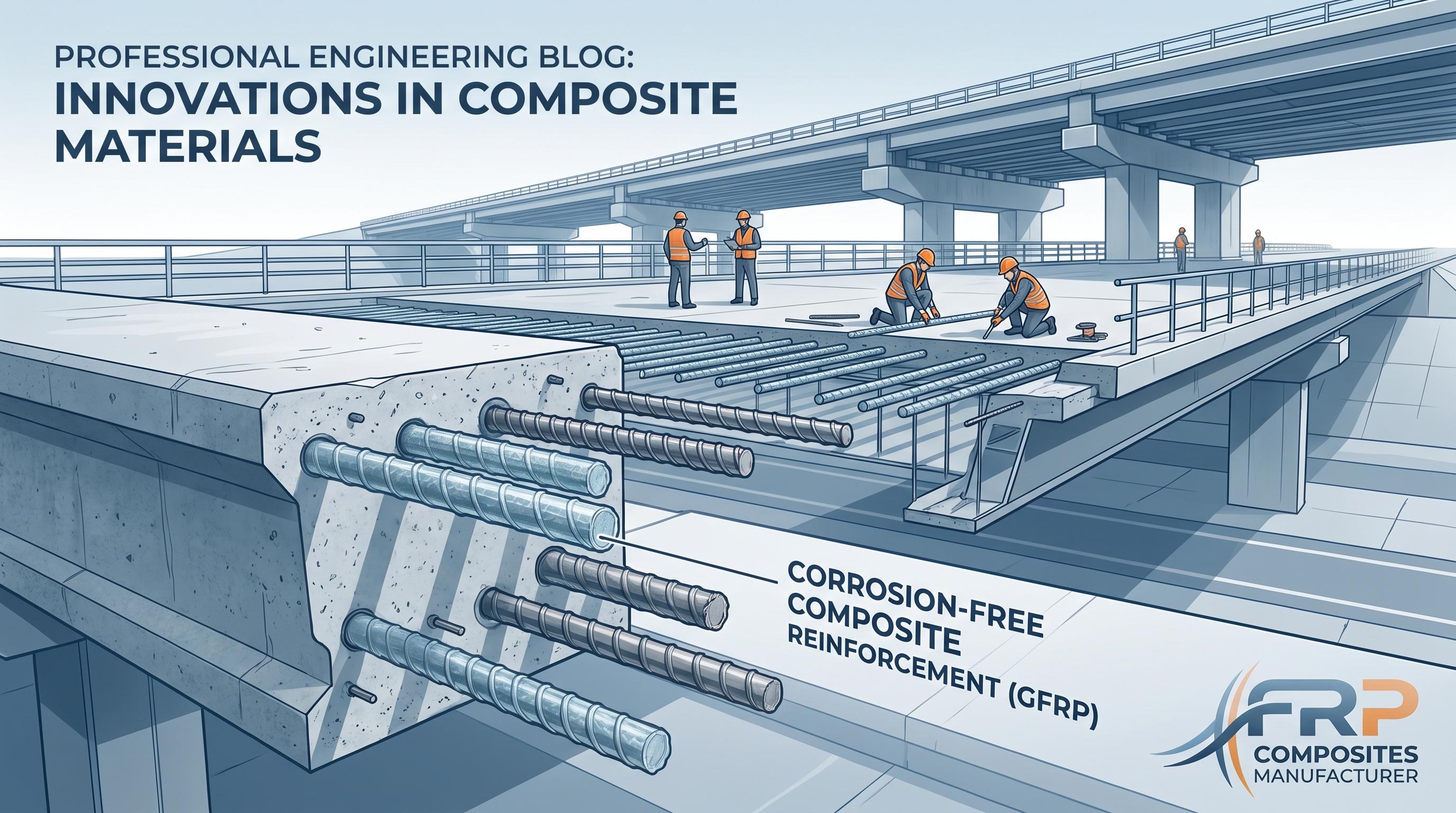
GFRP rebar is a non-metallic concrete reinforcement made from glass fibers embedded in a resin matrix. It is used as an alternative to steel rebar in structures where corrosion, maintenance, weight, or long service life are major design concerns.
For engineers, consultants, and EPC teams, the importance of GFRP rebar is straightforward: it removes the corrosion problem that often shortens the life of reinforced concrete in aggressive environments. That makes it a practical choice for industrial plants, water facilities, marine structures, coastal infrastructure, and other projects where steel can become a long-term maintenance liability.
What does GFRP stand for?
GFRP stands for Glass Fiber Reinforced Polymer. Glass fibers provide the tensile strength, while the polymer resin binds the material together and helps protect it from environmental exposure.
This combination creates a reinforcement bar that is lightweight, high-strength, corrosion-free, and non-conductive. Those properties are why GFRP rebar is increasingly considered in projects where traditional steel reinforcement may not deliver the desired lifecycle performance.
How is GFRP rebar made?
GFRP rebar is made by combining continuous glass fibers with a thermosetting resin, then forming the material into a reinforced bar profile suitable for bonding with concrete. Surface treatment and rib or spiral wrapping help improve the bond between the bar and the surrounding concrete.
The result is a composite reinforcement product that behaves differently from steel. It does not rust, it weighs far less, and it requires engineers to evaluate performance based on composite material properties rather than metallic behavior.
What are the key properties of GFRP rebar?
The main properties of GFRP rebar explain why it is used in demanding construction environments. It is designed to deliver strength and durability while reducing the long-term risks associated with corrosion-prone reinforcement.
Corrosion-free: GFRP does not rust, even in coastal, chemical, or high-moisture environments.
Lightweight: It is significantly lighter than steel, which helps reduce transport and site-handling effort.
High tensile strength: It offers strong tensile performance for reinforced concrete applications.
Non-conductive: It does not conduct electricity, heat, or cold, making it useful in specialized structures.
Durable: It is suited for long-life infrastructure where repair access is difficult or expensive.
At Hindustan FRP, GFRP rebars are positioned for corrosion-free industrial infrastructure, with key performance claims centered on lower weight, higher strength, long service life, and minimal maintenance requirements.
How is GFRP rebar different from steel rebar?
GFRP rebar differs from steel rebar mainly in how it performs over time in aggressive environments. Steel has a long history in reinforced concrete, but it remains vulnerable to corrosion when exposed to chlorides, chemicals, and repeated moisture cycles.
GFRP rebar addresses that weakness by eliminating the electrochemical corrosion mechanism. This can reduce the risk of cracking, spalling, repair cycles, and shutdown-related maintenance costs over the life of the structure.
Steel rebar: Strong and familiar, but vulnerable to corrosion in harsh-service conditions.
GFRP rebar: Corrosion-free, lightweight, and better suited for structures where durability and low maintenance are priority drivers.
The choice is not about replacing steel everywhere. It is about selecting the right reinforcement for the exposure condition, service-life target, and lifecycle economics of the project.
Where is GFRP rebar used?
GFRP rebar is used where the concrete structure is expected to face corrosive exposure, long operating life, or difficult maintenance access. In these projects, durability is a design requirement, not a secondary benefit.
Typical applications include marine works, coastal structures, water and wastewater plants, chemical processing units, industrial foundations, precast elements, bridges, and utility infrastructure. These are all environments where corrosion can materially reduce the effective service life of steel-reinforced concrete.
Why do engineers and owners choose GFRP rebar?
Engineers and owners choose GFRP rebar when they want reinforcement that supports long-term durability and lower maintenance burden. The decision usually becomes stronger when the cost of repair, downtime, access, or rehabilitation is high.
For industrial and public infrastructure, the real value often comes from lifecycle performance. A reinforcement material that helps avoid corrosion-related failures can protect project budgets long after the initial construction phase is complete.
Lower corrosion risk
Reduced maintenance exposure
Longer service-life potential
Easier handling because of lower weight
Better fit for harsh and remote environments
What should specifiers check before using GFRP rebar?
Specifiers should evaluate GFRP rebar against the actual design demands of the project before making a final selection. That includes structural requirements, exposure severity, detailing, constructability, and compliance expectations.
Key considerations include mechanical properties, design method, bar size availability, handling practices, code alignment, and supplier capability. Early technical coordination helps ensure the reinforcement choice matches both the structure and the site conditions.
For projects in India, certification and product quality are especially important. Hindustan FRP's IS 18256:2023 certification strengthens confidence for consultants, contractors, and procurement teams evaluating corrosion-free reinforcement for industrial applications.
Is GFRP rebar right for every project?
GFRP rebar is not automatically the best choice for every reinforced concrete project. It is most valuable where corrosion resistance, low maintenance, and long-term durability materially affect project outcomes.
That means the best use cases are usually projects with aggressive exposure conditions, high maintenance risk, or a strong need for long-life performance. In standard low-risk environments, the decision should still be based on design requirements and whole-of-life value, not trend alone.
Final takeaway
GFRP rebar is a modern composite reinforcement that helps solve one of concrete construction's biggest long-term problems: steel corrosion. By combining glass fibers and resin into a durable, lightweight, corrosion-free bar, it gives project teams a stronger option for harsh-service infrastructure.
For engineers, consultants, and EPC contractors working on industrial and infrastructure projects, the real question is not just what GFRP rebar is. It is whether the structure being designed would benefit from a reinforcement choice built for longer life, lower maintenance, and better performance in corrosive conditions.
Hindustan FRP supports that decision with IS 18256:2023 certified GFRP rebars and engineering-focused support for demanding project environments.
FAQ
GFRP rebar is made from continuous glass fibers embedded in a polymer resin. The fibers provide tensile strength, while the resin binds and protects the composite structure.
No. GFRP rebar is non-metallic, so it does not rust the way steel does. That makes it attractive in coastal, chemical, and high-moisture environments.
It is commonly used in marine structures, coastal infrastructure, water and wastewater plants, industrial foundations, chemical facilities, and other corrosive environments.
Yes. GFRP rebar is much lighter than steel, which can improve handling, transportation, and installation efficiency on site.
Industrial projects often face chemical exposure, moisture, and high maintenance costs. GFRP rebar helps reduce corrosion risk and supports longer-life, lower-maintenance concrete structures.
Vidhu Shrivastava
Vidhu Shrivastava drives product innovation and technical development at Hindustan FRP. Focused on advancing composite technologies, he works on developing next-generation reinforcement solutions that make infrastructure stronger, safer, and more sustainable.
More from Vidhu ShrivastavaKeep reading.
All insights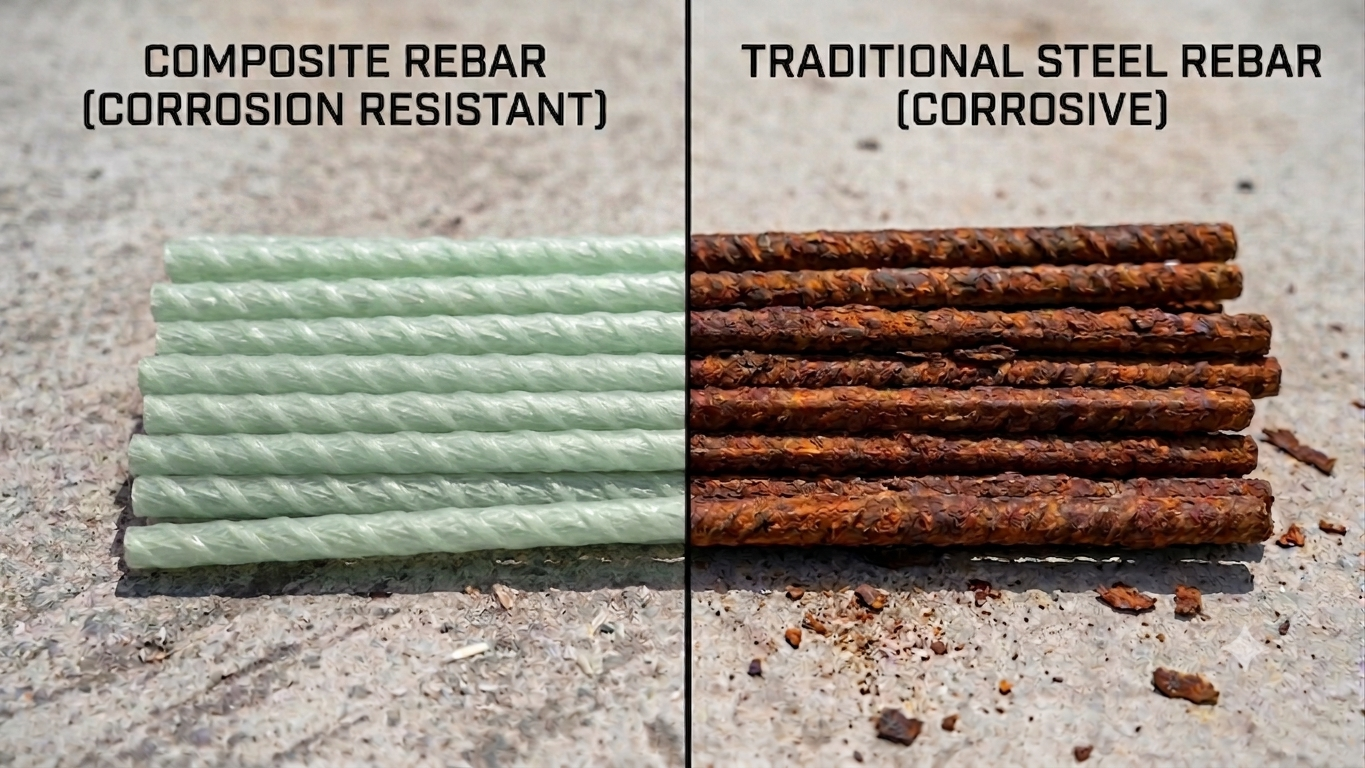
Why GFRP Rebars Outlast Steel in Harsh Environments
In corrosive industrial and coastal projects, steel reinforcement can become a long-term maintenance liability. This post explains why GFRP rebars last longer in harsh environments, where they work best, and what engineers should evaluate before specifying them.
 Made with Levo